
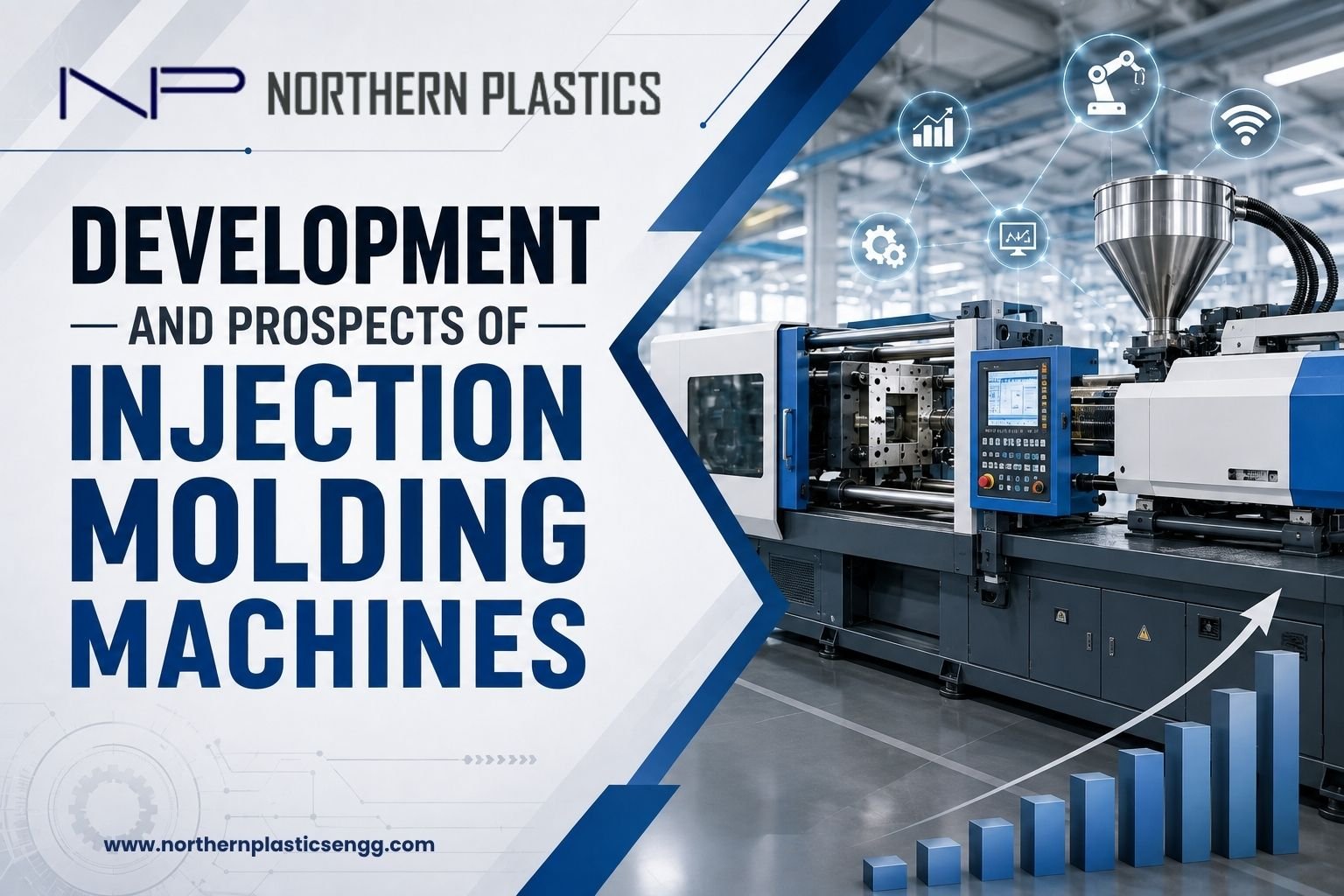
In the manufacturing sector, technology continues to change with time due to the need for increased speed of manufacturing, accuracy, energy conservation, and sustainability of the process. One of the most critical manufacturing technologies used in manufacturing high-quality plastic parts in large quantities is injection molding from Northern Plastic Engineering. Whether it’s for automobiles, electronics, medical devices, or consumer goods, injection molding machines are getting smarter and more efficient.
How Injection Molding Machines Have Developed
The initial injection molding machines were mainly designed to facilitate the process of plastic processing as well as enhance the level of production. Over time, due to improvements in technology, a lot has been achieved.
Modern machines now offer:
- Computerized control system: Computer control allows the monitoring of pressure, temperature, speed, and cycle time with greater accuracy.
- Precision: Modern servo and hydraulic systems offer higher precision of operation in injection and clamping processes.
- Increased productivity: An optimum machine cycle allows manufacturers to operate with steady productivity.
- Increased energy efficiency: Modern systems such as servo-hydraulic and all-electric systems allow for more efficient use of energy.
- Flexibility: The machines can handle a variety of thermoplastics along with various mould configurations.
These developments have made injection molding more reliable for industries where dimensional accuracy and repeatability are critical.
Key Technologies Shaping Modern Injection Molding
The future generation of machines is being affected by automation and Industry 4.0 technologies. Manufacturers are increasingly moving away from machine performance alone to production processes that are connected end-to-end.
- Automation and Robotics
Automated arms and material handling can be used to remove parts, inspect parts, assemble products, and package.
- Smart Manufacturing
IoT-integrated machines can help in collecting data and generating real-time data about machine performance. This information can be used by manufacturers for detecting variations in processes, productivity monitoring, and also predictive maintenance.
- Electric Injection Molding Machines
All-electric machines are getting recognition due to the accurate motion control, reduced noise, and energy efficiency. These types of machines are ideal for applications where high repeatability and a contamination-free environment is required.
- Advanced Process Control
Modern control systems can automatically adjust important process parameters. This helps maintain consistent product quality even when production conditions change.
Future Prospects of Injection Molding Machines
Future trends in injection molding include intelligent automation, sustainability, accuracy, and digitalization. Injection molding machinery is forecasted to integrate into machines that can communicate with other manufacturing machines and systems within the enterprise.
Future trends that can be identified are:
- Process optimization using artificial intelligence to detect any flaws and optimize the cycle.
- Predictive maintenance through real-time monitoring of machine condition.
- Design of energy-efficient machines to cut down on operational expenses.
- Use of recycled and biodegradable materials.
- Digital quality monitoring for faster detection of production deviations.
- Connected production lines integrating molding machines, robots, sensors, and inspection systems.
Choosing the Right Injection Molding Machine
However, technology is not sufficient in deciding the correct machine to purchase. We at Northern Plastic Engineering, as a manufacturing company, have to consider factors such as clamping force, injection capability, mold size, material compatibility, energy use, and after-sales service before making the investment.
Moreover, the correct machine can be chosen depending on the nature of the component.
Conclusion
The evolution of injection molding machinery is a clear indication of the change in modern-day manufacturing. As automation, intelligent controls, energy-efficient machines, and production driven by data become more relevant, the trend moves toward increased accuracy and efficiency.
For the manufacturer, purchasing the right injection molding equipment goes beyond merely boosting production; it is all about creating an efficient production system.
Frequently Asked Questions:
- What is the future of injection molding machines?
The future is focused on automation, AI-assisted process control, energy efficiency, IoT connectivity, and sustainable material processing. - How have injection molding machines improved over time?
Modern machines offer better precision, faster production, computerized controls, improved energy efficiency, and greater automation compared with older systems. - Are electric injection molding machines more energy-efficient?
Yes. All-electric machines can provide efficient operation, precise motion control, and reduced energy consumption compared with conventional hydraulic systems, depending on the application. - What should manufacturers consider when choosing an injection molding machine?
Key factors include clamping force, injection capacity, mould size, material compatibility, production volume, cycle time, automation needs, energy consumption, and after-sales support.