
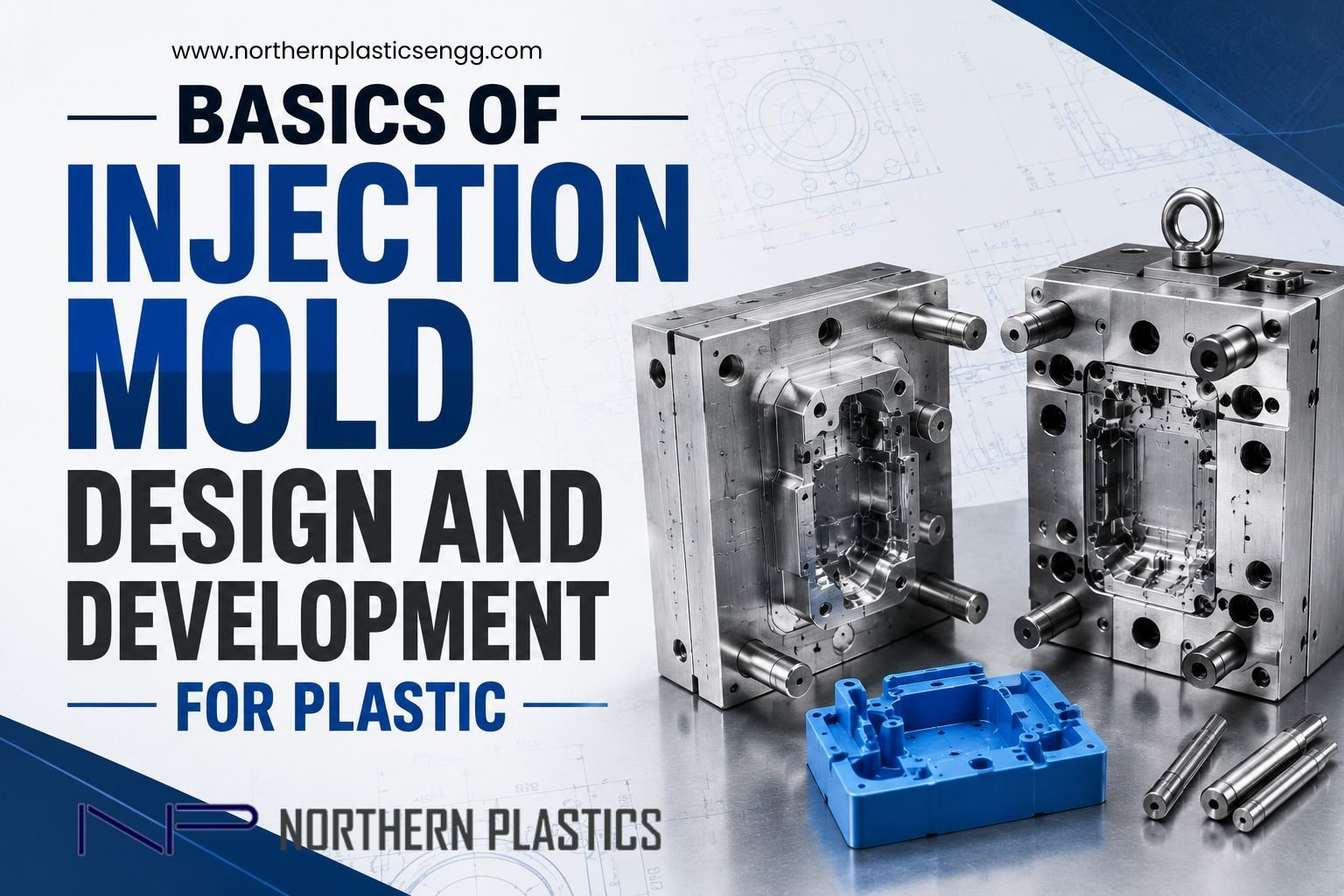
Plastic items are integral to nearly every sector today, ranging from automotive and electronics to medical equipment and consumer products. Every high-quality plastic part is the result of a carefully crafted Injection Mold Design and Development process. The effectiveness of plastic injection molding relies not only on the molding machine but also on the accuracy, strength, and functionality of the mold itself.
At Northern Plastics Engineering, extensive experience in mold production and plastic part development has yielded useful knowledge regarding the key factors for a successful injection mold. This guide outlines the basics of injection mold design and development along with the essential factors that affect product quality, production efficiency, and total manufacturing expenses.
What is Injection Mold Design And Development?
It involves crafting a mold that forms liquid plastic into a complete part. The procedure consists of analyzing the product, designing molds, selecting materials, manufacturing tools, conducting tests and validating before beginning the mass production. A well designed mold ensures:
- Consistent product quality
- High production efficiency
- Reduced material efficiency
- Longer mold life
- Lower maintenance cost
- Faster production cycles
The quality of the mold directly impacts the final product appearance, strength, dimensional accuracy and performance.
Understanding the Plastic Component Before Mold Design:
An experienced mold designer starts with a comprehensive assessment of the plastic parts instead of immediately building the molds. The key factors analyze includes:
1. Part Geometry:
- Wall thickness consistency
- Complex features & undercuts
- Rib & boss placements
- Product dimensions and tolerance
2. Material Selection:
The different plastics behave differently during molding. The common material include:
- Polypropylene
- ABS
- Nylon
- Polycarbonate
- HDPE
- PBT
Every material exhibits distinct shrinkage rates, flow properties and cooling needs that affect mold design.
3. End Use Application:
The mold design must supports the product intended application, whether it is used in:
- Automotive assemblies
- Electrical equipment
- Medical products
- Consumer goods
- Industrial components
Key Elements of Injection Mold Design:
A successful mold is built around several critical design elements.
1. Cavity & Core Design:
The cavity shapes the outer form of the products whereas the core develops the inner characteristics. The portable cavity core design ensures:
- Accurate dimension
- Easy part ejection
- Consistent product quality
- Reduced molding defects
2. Gate Design & Placement:
The gate controls how molten plastic enters the mold cavity. By selecting the right gate type and location helps achieve:
- Uniform material flow
- Reduced weld lines
- Minimal stress marks
- Better surface finish
3. Runner System Design:
The runner system transports molten plastic from the injection nozzle to the cavity. The option include are:
- Cold runner system design
- Hot runner system design
Importance of the Cooling System Design:
Cooling is a crucial component of injection mold design and development. The industry experience indicates that cooling can represent a considerable part of the total molding cycle. A streamlined cooling system delivers:
- Faster production cycle ‘
- Consistent cooling
- Reduced warpage
- Improved dimensional stability
The strategically placed cooling system ensures uniform temperature distribution throughout the mold.
Ejection System Design:
Once the plastic components solidify, it must be removed without damages. The common ejection method include:
- Ejector pins
- Sleeve ejectors
- Stripper plates
- Air ejection systems
These ejection systems must be designed carefully to avoid:
- Product deformation
- Surface marks
- Cracks & stress points
Proper ejection design contributes significantly to production reliability.
Mold Flow Analysis: A critical Development Step:
Modern mold development relies heavily on simulation technologies. As the mold flow analysis helps engineers predict the:
- Material flow behavior
- Air traps
- Weld line locations
- Shrinkage patterns
- Potential defects
By identifying issues during the design stage, manufacturers can reduce costly modification later in the production process.
Tool Steel Selection & Mold Life:
The durability of an injection mold largely depends on the material selection. As the common mold steel grades include:
- P20 steel
- H13 steel
- S136 steel
- Hardened tool steel
The factors to consider while selecting mold materials are:
- Production volume
- Plastic material type
- Surface finish requirements
- Wear resistance needs
A properly selected tool steel ensures consistent performance over thousands or even millions of production cycles.
Common Challenges in Injection Mold Development:
Even experienced manufacturers encounter challenges during the mold development. The some common issues include:
- Warpage of plastic parts
- Sink marks
- Flash formation
- Shorts shots
- Dimensional inconsistencies
- Uneven cooling
These challenges can often be minimized through advanced design engineering, mold flow analysis and accurate tool manufacturing.
Why Professional Injection Mold Design Matters?
Many businesses focus on reducing tooling costs, but an improperly designed mold often results in higher expenses over time. A professionally engineered mold offers:
- Better product consistency
- Lower rejection rates
- Less downtime
- Faster production cycles
- Longer tool life
- Improved return on investment
The mold is the foundation of every successful plastic injection molding project making design expertise a critical factor.
Why Choose Northern Plastic Engineering for Injection Mold Design & Development?
With years of experience in the industry we at Northern Plastic Engineering provide accurate injection mold design and development solutions customized to diverse industrial requirements.
- Experienced mold design & engineering team
- Advanced CAD/CAM and mold flow analysis capabilities
- Accurate tool manufacturing & infrastructure
- Focus on product functionality & manufacturability
- High quality mold materials & components
- End to end support from design to production
Best Injection Mold Design & Development – Northern Plastic Engineering:
The efficient Injection Mold Design and Development goes beyond just manufacturing a mold—it’s a strategic engineering procedure that influences the quality, performance and cost efficiency of the end plastic product. Concentrating on product design evaluation, material performance, cooling effectiveness, and accurate tooling enables manufacturers to attain exceptional production results. With years of experience in plastic engineering and mold design, Northern Plastics Engineering helps companies in turning product ideas into dependable, high-quality plastic parts via innovative and precise mold solutions.