
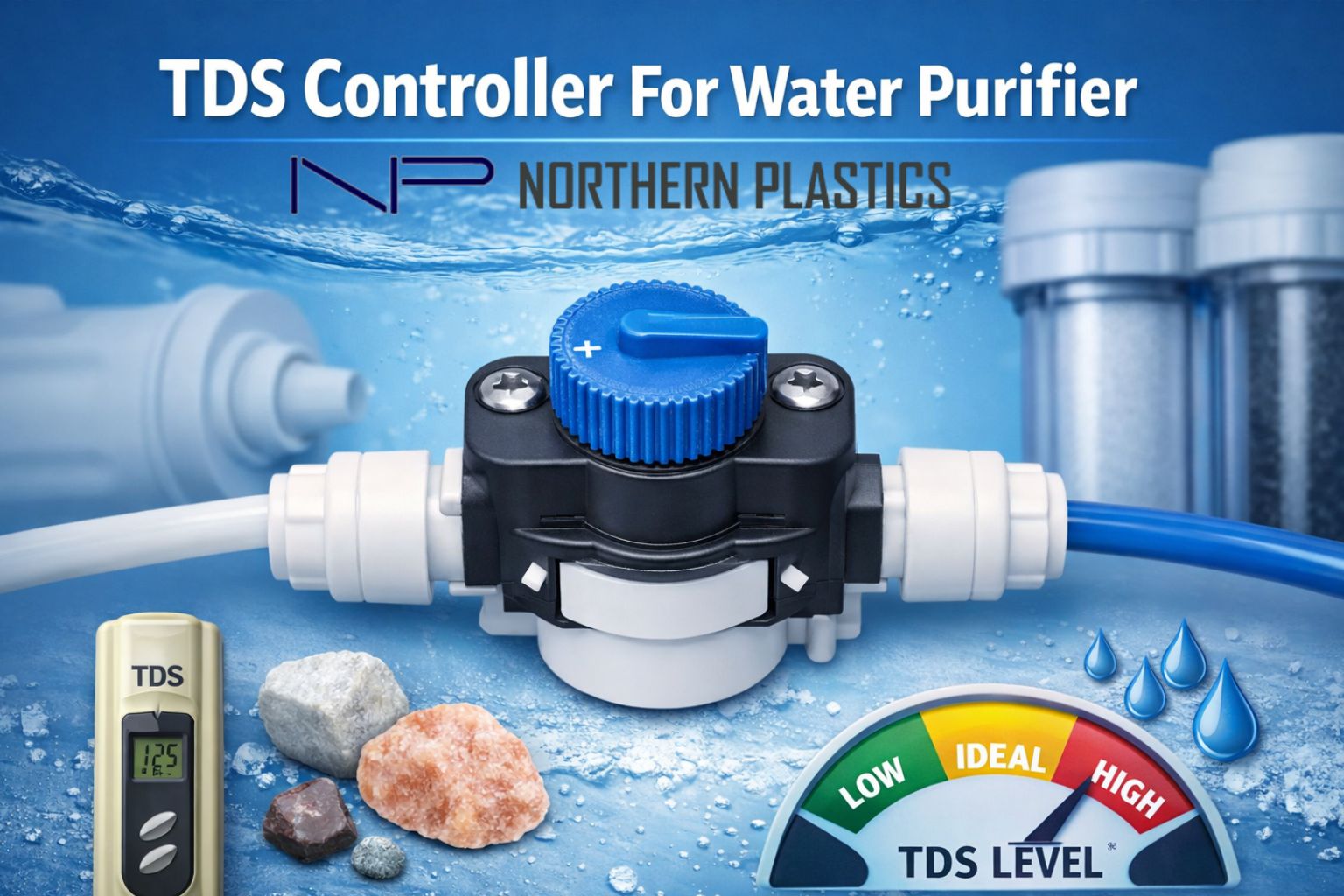
Having access to clean and safe drinking water is crucial for a healthy lifestyle. As we know about water contamination is continuously growing, water purifiers have turned into an essential need for both homes and businesses. We at Northern Plastic Engineering, looks into the features of purifiers as you might have seen the term MTDS. So, what is MTDS in water purifiers and why does it matter? Let’s understand into it more thoroughly.
Understanding TDS In Water:
Before understanding MTDS, it is crucial to know what is TDS (Total Dissolved Solids), it is all about – the overall concentration of dissolved material in water, which includes minerals, salts, metals and organic matter. These dissolved solid can consists of calcium, magnesium, sodium, potassium, chlorides and sulfates.
TDS is quantified in parts per million. For drinking water, the perfect TDS level usually falls between 50 – 150 ppm, though water with 300ppm is generally seen as acceptable. With extremely low TDS might be missing in vital minerals but very high TDS can change the taste and may indicate contamination.
What is MTDS?
It is a “Manual Total Dissolved Solid” controller, as it features you will find it in a lot of modern RO water purifiers. It gives users the ability to manually adjust the TDS level of the purified water based on their personal tatse or local water quality.
RO purifiers do a great job of getting rid of impurities but they also remove essential minerals along with the bad stuff. This can lead to water that has really low TDS level, which might taste with lack of nutrients. MTDS helps in solving the issue by allowing the user to mix a specific amount of raw water with the RO – treated water, thereby adjusting the final TDS level.
How Does MTDS Work?
MTDS operates via a manual valve or controller installed inside the water purifier. Here is the way it works:
- The RO membrane cleans the water by eliminating dissolved impurities.
- A small amount of untreated or pre-filtered water goes around the RO membrane.
- The MTDS valve controls how much of this water is mixed back into the purified water.
- By adjusting the valve, users can increase or decrease the TDS level of the water that comes out.
This assures that the water keeps a balanced mineral content while still being safe to drink.
Benefits of MTDS in Water Purifiers:
- Better Taste: Water with low TDS can taste extremely dull, so MTDS helps in keeping a good mineral balance which boosts the flavor.
- Adjustable TDS Level: Water quality varies from one region to another. MTDS allows users to adjust the TDS according to local water condition.
- Retain Essential Mineral: Water purifiers removes both harmful and beneficial mineral. It helps in ensuring that water have essential minerals like calcium and magnesium that are kept in right amount.
IS MTDS is Essential For Every Water Purifier?
MTDS is particularly beneficial in water purifiers, especially in regions where the water TDS is over 300 ppm. If your water source has a low TDS level, an UV or UF purifier could do the best job and you might not need the MTDS feature. You should check the water’s TDS level of your purifier before buying a purifier. This will help you figure out which one you need with MTDS capabilities.
Conclusion:
TDS Controller for water purifiers plays a crucial role in maintaining the right balance of minerals in drinking water. It allows users to adjust the Total Dissolved Solids (TDS) level according to their needs, ensuring better taste and healthier water. A good TDS controller helps in mixing purified water with essential minerals, preventing water from becoming too flat. Northern Plastic Engineering is a leading TDS Controller for Water Purifier manufacturers, known for delivering high-quality and durable components. Their products ensure precise control, long-lasting performance, and are widely used in modern residential and commercial water purification systems.