
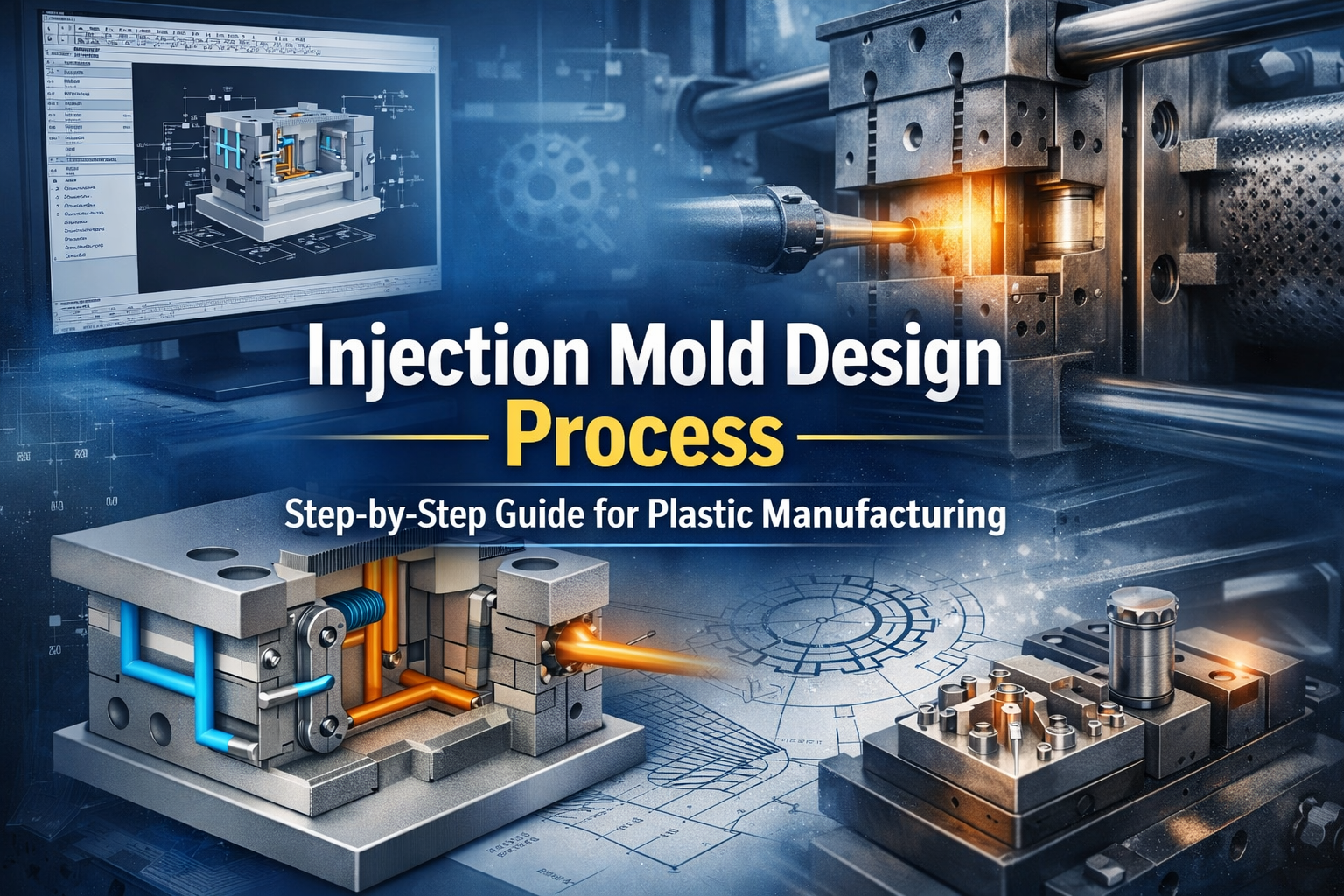
Injection molding is an extremely popular technique for mass production of high-quality plastic components. The secret to successful injection molding is the design of the injection mold, which is of paramount importance in determining the quality of the product.
In this blog, we will walk you through the process of designing an injection mold from concept to completion and highlight the importance of having a properly designed mold for successful plastic manufacturing.
What is Injection Mold Design?
Injection mold design is all about engineering a mold that turns molten plastic into a final product. The mold needs to be crafted to assure:
- Smooth surface finish
- Accurate dimension part
- Effective material flow
- Few defects
- Extended mold lifespan
A properly designed mold enhances product quality while also reducing the cycle time, material waste and maintenance expenses.
Step By Step Process of Injection Mold Design:
Product Analysis & Requirement Study:
The process of designing an injection mold begins with a thorough examination of the plastic components. Engineers take a close look at:
- Shape & complexity of the part
- Thickness and consistency of walls
- Functional Needs
- Intended Application
- Anticipated Production Quantity
At this point, the choice of material is also settled since various plastic reacts differently when molded.
Design For Manufacturability:
Before we proceed to create the mold, we perform DFM analysis to optimize the product design for injection mold manufacturing. This enables us to identify potential issues at an early stage, such as:
- Hazardous features that may cause stress
- Irregular wall thickness that may cause wrapping
- Features with undercuts that are difficult to create in molds
DFM ensures that the design can be manufactured successfully without compromising its integrity and aesthetics.
Selection of Mold Type and Layout:
Based on the production needs and the complexity of the components, design engineers select the appropriate type of mold that can be:
- Single mold cavity
- Multiple mold cavity
- Family mold
- Hot runner mold or cold runner mold
Core Cavity & Design:
The core and cavity are super important parts of injection mold design. They shape the final product. The designers carefully consider:
- Shrinkage allowance of the plastic material
- Draft angles for easy ejection
- Surface finish requirement
To make sure everything is accurate and consistent, high-precision CAD software is utilized.
Runner, Gate and Sprue Design:
The runner system manages the flow of molten plastic into the cavity. The important factors to keep in mind are:
- Even flow to avoid defects
- Correct gate placement to prevent weld lines and sink marks
- Effective use of material
A well designed runner and gate leads to uniform filling and high quality molded parts. As every injection mold design needs a gate which is basically an opening that let the molten plastic flow into the mold cavity. The type, design and placement of the gate can influence various aspects of the part, including how well it packs, how the gate is removed or leave a mark, the part cosmetic look and its dimension and potential warping.
Cooling System Design:
Cooling plays a crucial role in determining cycle time and the quality of parts. A properly designed cooling system:
- Keeps the mold temperature consistent
- Minimizes war page and internal stresses
- Boosts production efficiency
Cooling channels are thoughtfully positioned to evenly dissipate heat from the mold.
Ejection System Design:
Once the plastic part solidifies, it must be removed without damage. The ejection system may include:
- Ejector pins
- Sleeves
- Stripper plates
This system is built to exert even pressure which helps to avoid any warping or surface blemishes on the part.
Mold Flow Analysis and Simulation:
Today’s injection mold design relies on simulation tools to forecast.
- Material flow pattern
- Air traps and weld lines
- Cooling efficiency
- Possible defects
Mold flow analysis is key to refining the design prior to production which saves both time and money.
Tooling Design and Manufacturing:
Once everything gets the final approval, we create detailed tooling drawing. Then the mold is crafted through accurate machining technique like:
- CNC machining
- EDM – Electrical Discharge Machining
- Grinding & Polishing
We use high quality steel to assure durability and long service life.
Trials and Run Validation:
Before full scale production, we do some trial molding runs to check.
- Part sizes
- Surface quality
- Time per cycle
- Mold performance
We make any necessary changes to get the mold just right for the best performance.
Injection Mold Design Expertise at Northern Plastic Engineering:
At Northern Plastics Engineering, the injection mold design is handled with a focus on precision, creativity and extensive technical expertise. By utilizing advance CAD/CAM technology, mold flow analysis and a wealth of manufacturing experience, the company produces molds that follows to strict quality and performance criteria. From the initial concept to the final production stage, each mold is crafted to assure efficiency, precision and dependability.
Conclusion:
The injection mold design is a tricky yet crucial process that plays a key role in the success of injection molding projects. Northern Plastic Engineering has adopted a structured design method and utilized advanced engineering tools, manufacturers can enhance product quality and boost production efficiency. If you want dependable and well-crafted injection molds, picking the right design partner is vital.